

What Stucco Damage Actually Means
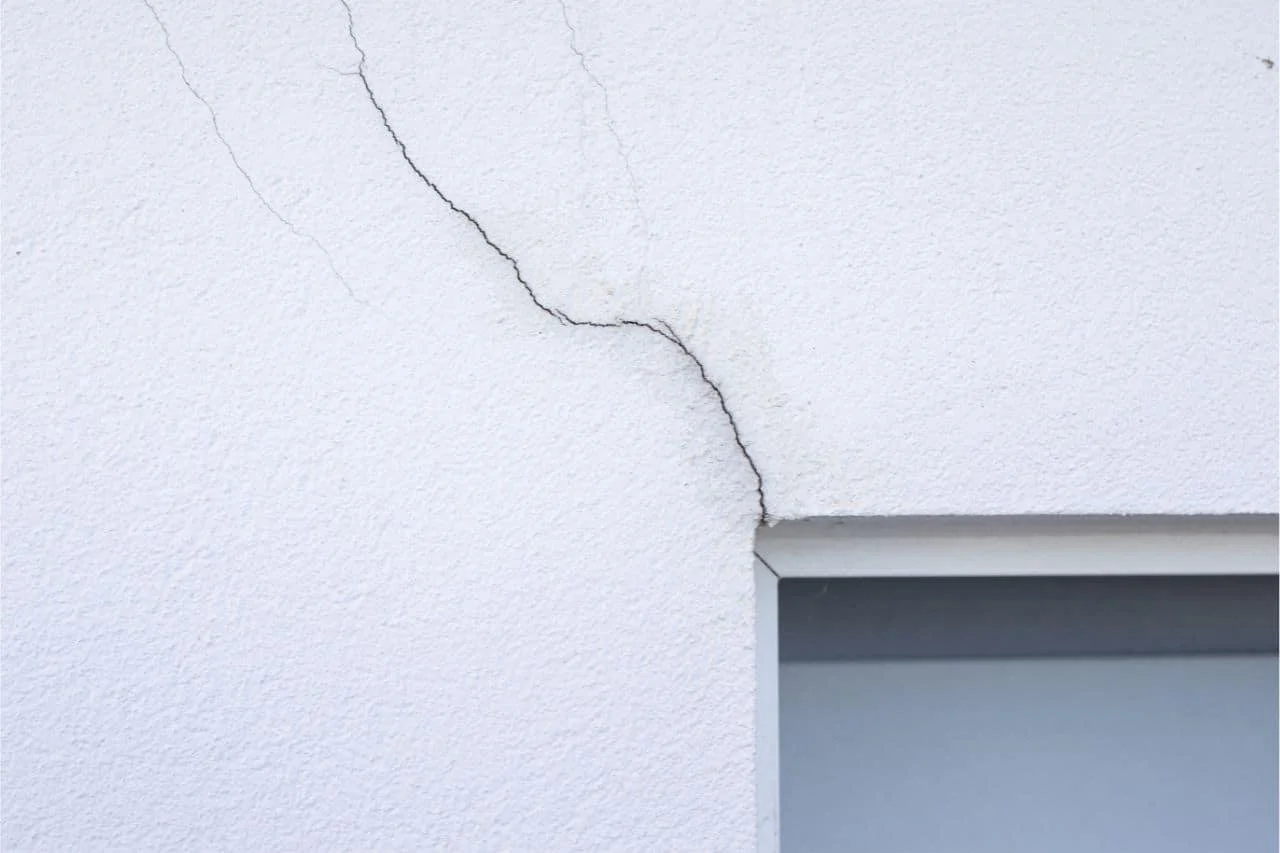
How to tell what matters and what doesn’t
Stucco changes over time.
That’s normal.
What’s hard is knowing which changes mean something and which ones don’t.
A small crack can be nothing.
Or it can be the start of something that keeps coming back.
The difference is not how it looks.
It’s whether it’s changing.
What you’re seeing
Cracks, lines, or surface changes.
Some are thin and stay the same.
Some come back in the same spot.
Some areas look more worn than others.
They may look similar.
They are not.
What’s actually happening
Stucco is rigid.
When the home moves — even slightly — stucco shows it.
That movement can come from:
• normal expansion and contraction
• stress at windows, doors, and corners
• sun and weather exposure
That’s why cracks show up in the same types of areas.
Why paint matters
Stucco needs protection.
The paint is part of that system.
It helps control how water moves in and out of the surface.
Over time, that coating breaks down.
When it does:
• water moves in more easily
• the surface wears faster
• cracks show up more often
If the coating is failing, the stucco is more exposed.
Why prep and product matter
How stucco is painted affects how it performs.
If it’s not prepped properly, coatings don’t bond well.
If the product is too rigid, it can’t move with the surface.
That leads to:
• cracks coming back quickly
• paint breaking down early
• uneven failure in certain areas
Coatings designed for stucco allow slight flexibility.
That doesn’t stop movement.
It helps the surface handle it better.
The key difference
There are two situations:
Cracks that already happened
Cracks that are still happening
They can look the same.
They are not.
When it’s likely normal
You’re usually looking at normal aging if:
• cracks are thin and stable
• they don’t spread
• they don’t come back after repair
• paint is still intact
When it needs attention
Look closer if:
• cracks reopen or widen
• the same area keeps failing
• paint is fading, chalking, or wearing thin
• cracking is around windows, doors, or transitions
That means the area is still under stress or not protected properly.
What to do next
If it’s stable, monitor it.
If it’s changing, stop treating it like a simple patch.
Step back and look at the full section.
The goal is not just to fix the crack.
It’s to understand why it’s there.
Who to call
Start with what that area is dealing with.
If it’s near roof lines or water flow
A roofing professional can help check for water involvement
If it’s surface-related or tied to coating failure
A contractor experienced with stucco and exterior painting can evaluate prep, product, and condition
If the same area keeps failing or multiple areas are involved
A broader exterior evaluation helps identify where the home is under stress
What to avoid
• assuming all cracks are the same
• repairing the same area the same way
• ignoring failing paint
• using rigid or incompatible products
• skipping proper prep
Final thought
Stucco will show you where something is happening.
Paint shows you how well that area is protected.
You need both to understand the full picture.
Disclaimer
This article is provided for general educational purposes only and is intended to help homeowners better understand common conditions related to exterior finishes. It is not a diagnosis, a scope of work, or a recommendation for any specific repair.
Every home is different. Conditions can vary based on materials, installation, exposure, and structural factors. What appears to be a minor issue may involve underlying conditions that are not visible without a proper on site evaluation.
No action should be taken based solely on this information. Any inspection, repair, or replacement decisions should be made with a qualified professional who can assess the specific conditions of the property.
The author and publisher assume no responsibility or liability for any actions taken or not taken based on the content of this article, or for any outcomes resulting from reliance on this information.
