

The Right Way to Remove Wallpaper and Texture Your Walls
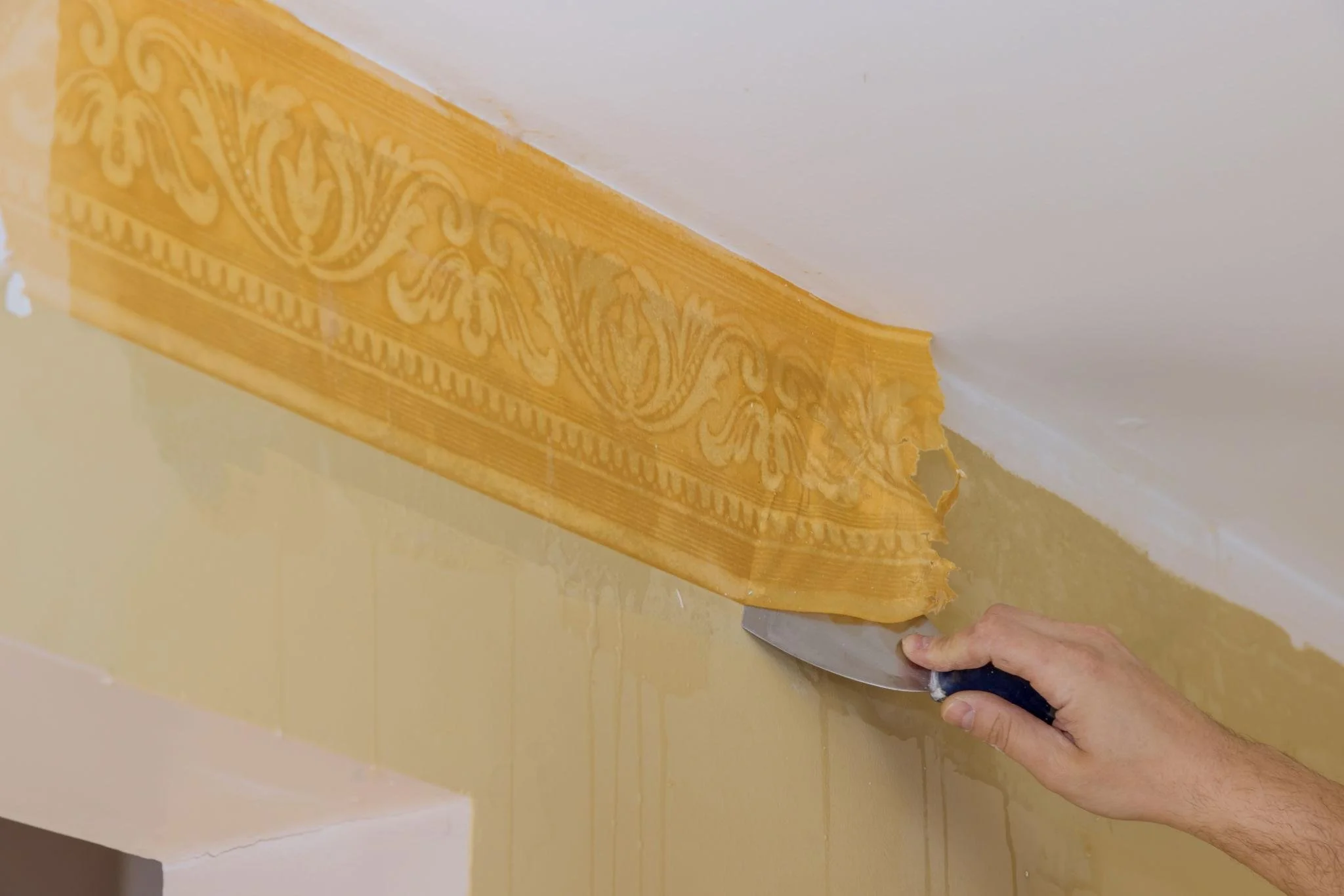
And why it’s never as simple as it sounds
You decide to take the wallpaper down.
It feels like it should be straightforward. Pull it off, clean it up, texture, paint, done.
Then you actually start, and it doesn’t come off clean. Parts stick. Parts tear. And what’s left behind doesn’t look anything like a wall you can work with.
That’s where most people realize this isn’t just a removal job.
What you’re really dealing with
Wallpaper doesn’t just sit on the wall. It bonds to it, and it’s usually been there for years.
When it comes off, it takes pieces of the surface with it. What you’re left with is a mix of adhesive, torn drywall paper, and areas that are all going to react differently to anything you put on top.
At that point, the wall isn’t ready for texture or paint. It’s not even close.
Where this usually goes wrong
Most people try to move too fast here.
They get the wallpaper off, let it dry, and go straight into texture or paint.
It might look okay at first, but it doesn’t hold. The texture goes on uneven, the finish looks off, and over time, it starts to fail.
That’s because the surface underneath was never brought back to where it needed to be.
What actually needs to happen
Once the wallpaper is off, the real work starts.
All of that adhesive has to come off. Not just the heavy areas, all of it. If anything is left behind, it will affect how the wall absorbs primer, texture, and paint.
After that, the wall needs to be sealed. That step matters more than people expect. It locks everything down and gives you a consistent surface to work from.
From there, the wall usually needs to be skim coated. That’s what smooths out the damage and gets everything back to a level, workable surface.
Only then does texture go on.
Then paint.
Why texture doesn’t fix it
Texture isn’t there to hide a bad surface.
It follows whatever is underneath it.
If the wall isn’t right, the texture will show it, not fix it. That’s where you end up with walls that just look off, even if you can’t immediately explain why.
What to expect going in
If you’re planning to remove wallpaper, you need to think past the removal.
It’s not just about getting it off the wall. It’s about what it takes to get that wall back to a point where it actually looks finished again.
That’s the part most people don’t plan for.
Who to call
This is one of those situations where it helps to have someone who understands drywall, not just removal.
A good painter or drywall professional can take it all the way through, from getting the paper off to getting the wall finished correctly.
What to avoid
Don’t texture over adhesive. Don’t skip sealing. And don’t assume that once the wallpaper is off, the wall is ready for the next step.
That’s where most of the problems come from.
When to slow down
If the drywall paper is torn up or the surface feels inconsistent, that’s not something to rush through.
That’s where the finish is either going to come together or fall apart.
Final thought
Getting the wallpaper off is one part of it.
Getting the wall right after is what actually matters.
Disclaimer
This article is provided for general educational purposes only and is intended to help homeowners better understand common interior processes. It is not a diagnosis, a scope of work, or a recommendation for any specific project.
Every home is different. Conditions can vary based on materials, installation, and prior work. What appears to be straightforward may involve additional steps that are not visible without proper evaluation.
No action should be taken based solely on this information. Any decisions should be made with a qualified professional who can assess the specific conditions of the space.
The author and publisher assume no responsibility or liability for any actions taken or not taken based on the content of this article, or for any outcomes resulting from reliance on this information.
