

Why Sampling Paint the Right Way Matters
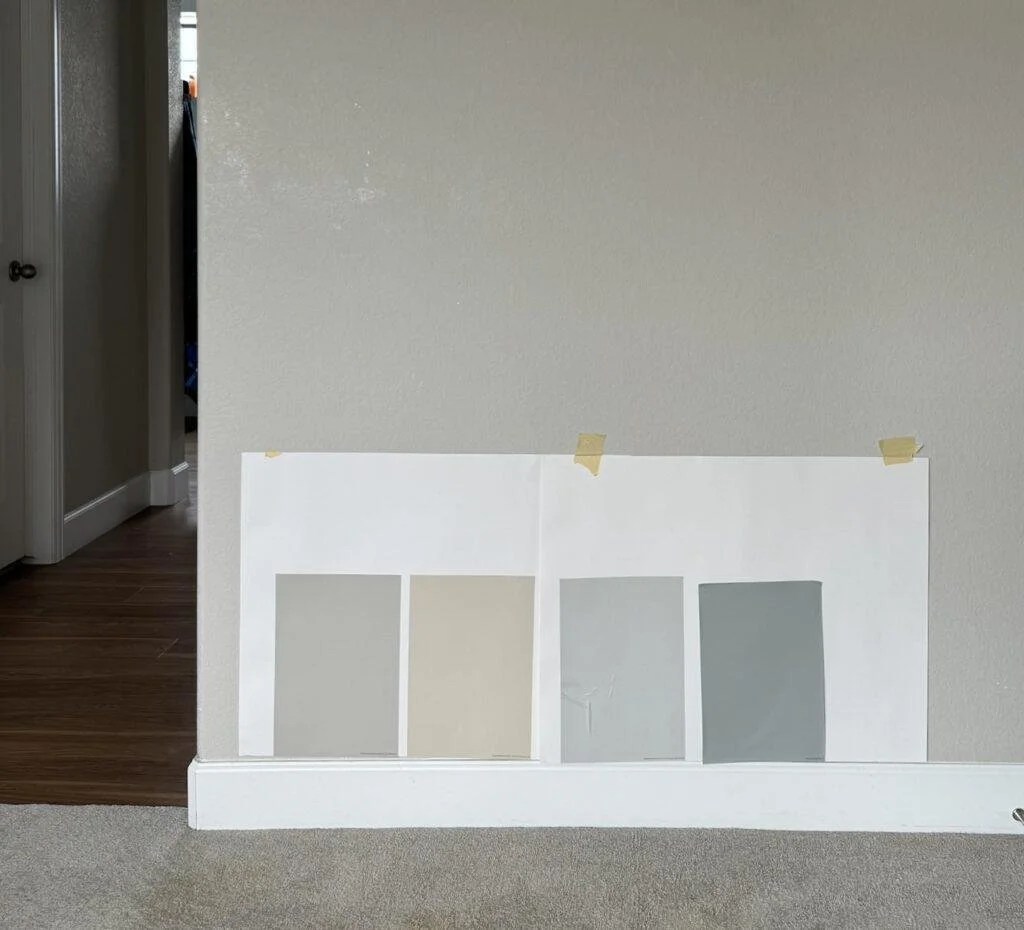
And why it can save you time and money
You pick a color.
You grab a sample, put a small square on the wall, and step back. It looks good, so you move forward.
Then the room gets painted, and it doesn’t look the same.
That happens all the time, and it’s usually because the decision was made too early.
What you’re really looking at
A paint sample isn’t just about the color itself. It’s about how that color actually shows in your space.
Lighting changes it throughout the day. The surrounding walls, floors, and trim affect how it reads. Even the size of the sample changes what you see.
When the sample is too small, you’re not really seeing the color. You’re seeing it blended into everything around it.
Why this goes wrong
Most people put up a small swatch, look at it once, and decide.
The problem is, your eye fills in the rest. It adjusts the color based on what it’s next to and how the light is hitting it at that moment.
So the color you think you’re choosing isn’t always the one you end up with once the whole wall is painted.
Why sampling has real value
Getting the color wrong is expensive.
It’s not just buying more paint. It’s paying for labor again, going through the process again, and living with something that didn’t turn out the way you expected.
Taking the time to sample properly upfront is what avoids that. It gives you a clear answer before you commit.
It saves time, and it saves money.
What actually works
You need to see the color in a way your eye can read clearly.
That means using a larger sample and looking at it more than once.
Put it on the wall in a section big enough to step back from. Look at it in the morning, in the afternoon, and at night. Watch how it shifts.
Because it will.
Where to put it
Don’t rely on one spot.
Light hits different walls differently, and that changes everything.
A color that looks right in one area can feel completely off in another.
What to do before deciding
Give it time.
Live with it for a few days. Walk past it. See it without trying to evaluate it.
That’s when you start to understand how it actually feels in the space.
Who to call
If you’re unsure, an experienced painter can help you narrow it down based on how the color will actually read in your home, not just how it looks on a sample.
What to avoid
Don’t rely on a small swatch
Don’t decide after looking at it once
And don’t rush the decision
Final thought
A quick decision is easy.
Redoing it isn’t.
Disclaimer
This article is provided for general educational purposes only and is intended to help homeowners better understand common interior decisions. It is not a recommendation for any specific product or color.
Every home is different. Lighting, layout, and surroundings all affect how paint appears. What looks right in one space may not look the same in another.
No decision should be made based solely on a single sample or observation. Final selections should be made after proper evaluation in the actual space.
The author and publisher assume no responsibility or liability for any actions taken or not taken based on the content of this article, or for any outcomes resulting from reliance on this information.
