

Why Damaged Gutters Become Expensive Faster Than People Think
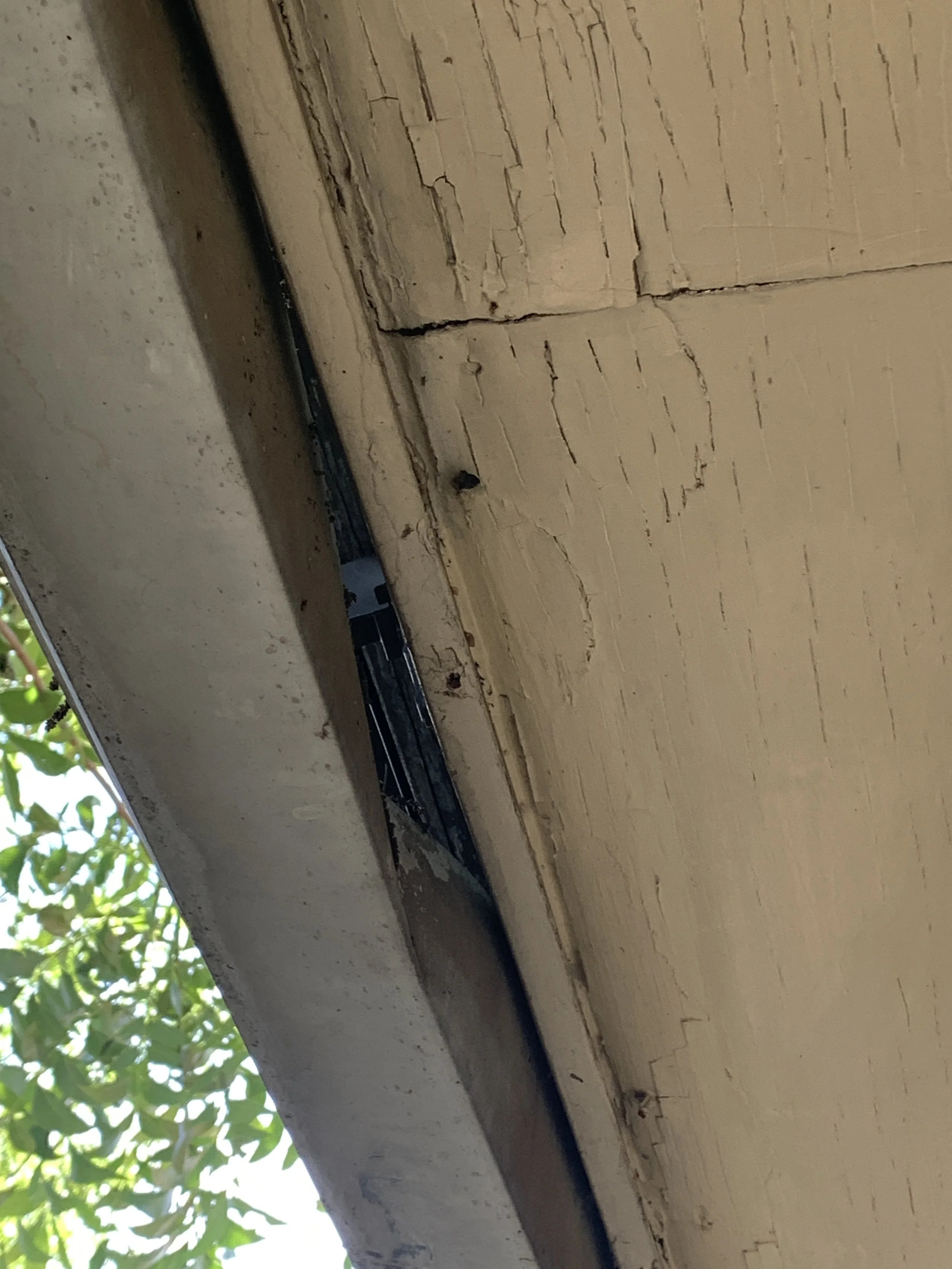
What you’re not looking at and why it matters
Most gutter problems don’t look expensive at first.
A loose section. A seam leaking during rain. Water spilling over one corner.
It feels minor. Easy to ignore.
But gutters are connected directly to the roof edge and the materials below. That’s why small issues rarely stay small.
What you’re seeing
From the ground, gutter damage often looks isolated.
Maybe one area pulls slightly away. Maybe water drips from one corner. Maybe you notice stains near the fascia.
The gutter becomes the focus because it’s what’s visible.
But the real damage is often hidden behind it. Gaps between the gutter and fascia, or where it separates from the roof edge, can trap water and create slow-moving deterioration.
What it usually means
Gutters are meant to control roof runoff. When they fail, water begins reaching materials not designed for repeated exposure.
Over time, that can affect:
• Fascia boards behind the gutter
• Soffits underneath the roof edge
• Paint near the roofline
• Stucco or siding below overflow points
• Window trim and roof-to-wall transitions
The gutter itself may be minor compared with the cost of damage behind it.
What to check
Don’t just look at leaves or obvious clogs. Focus on areas where damage hides:
• Gaps behind the gutter where water can sit against fascia or roof edges
• Gutters pulling away from the fascia or roofline
• Seams that are open, rusted, or leaking
• Water spilling over instead of flowing to downspouts
• Staining or peeling paint along the roof perimeter
• Soft or deteriorated wood behind or beneath the gutter
• Sagging sections that hold standing water
Those hidden areas are often the first signs of serious problems. Catching them early can prevent larger repair costs.
What matters and what doesn’t
What matters is whether water is being properly directed away from the home.
What doesn’t matter is that the gutter appears mostly intact from a distance.
A gutter can look functional while hidden damage is already forming behind it.
That’s why these problems are often underestimated early on.
What to do next
If gutters are leaking, separating, or overflowing, inspect the hidden areas behind and beneath them.
Check fascia, soffits, paint, stucco, and wood for moisture damage.
Correcting hidden gaps before they create larger issues can save significant repair costs later.
What to avoid
Don’t assume gutter issues are only cosmetic.
And don’t repaint or patch fascia or trim without addressing the underlying water management problem. That usually leads to the same damage recurring.
When to take it more seriously
Repeated staining, soft wood, peeling paint, or moisture behind the gutter usually indicates the problem has already spread beyond the gutter itself.
That’s usually when repair costs start growing quickly.
Final thought
Gutters do more than move water off the roof.
They protect everything connected to the roofline.
Small damage at the gutter edge, or hidden gaps behind it, can quickly turn into expensive exterior repairs. Catching these early matters more than most homeowners realize.
Disclaimer
This article is provided for general educational purposes only and is intended to help homeowners better understand common conditions related to roof leaks and moisture intrusion. It is not a diagnosis, a scope of work, or a recommendation for any specific repair.
Every home is different. Conditions can vary based on age, materials, prior work, weather exposure, and construction methods. What appears to be a minor issue may involve underlying conditions that are not visible without a proper on site evaluation.
No action should be taken based solely on this information. Any inspection, repair, or replacement decisions should be made with a qualified professional who can assess the specific conditions of the property.
The author and publisher assume no responsibility or liability for any actions taken or not taken based on the content of this article, or for any outcomes resulting from reliance on this information.
