

“We Already Fixed That”
Why it keeps coming back and what that usually means
“I already had that repaired.”
That’s usually said with some frustration behind it, and most of the time it’s true. Something was fixed. The issue is that what was fixed isn’t always the actual problem.
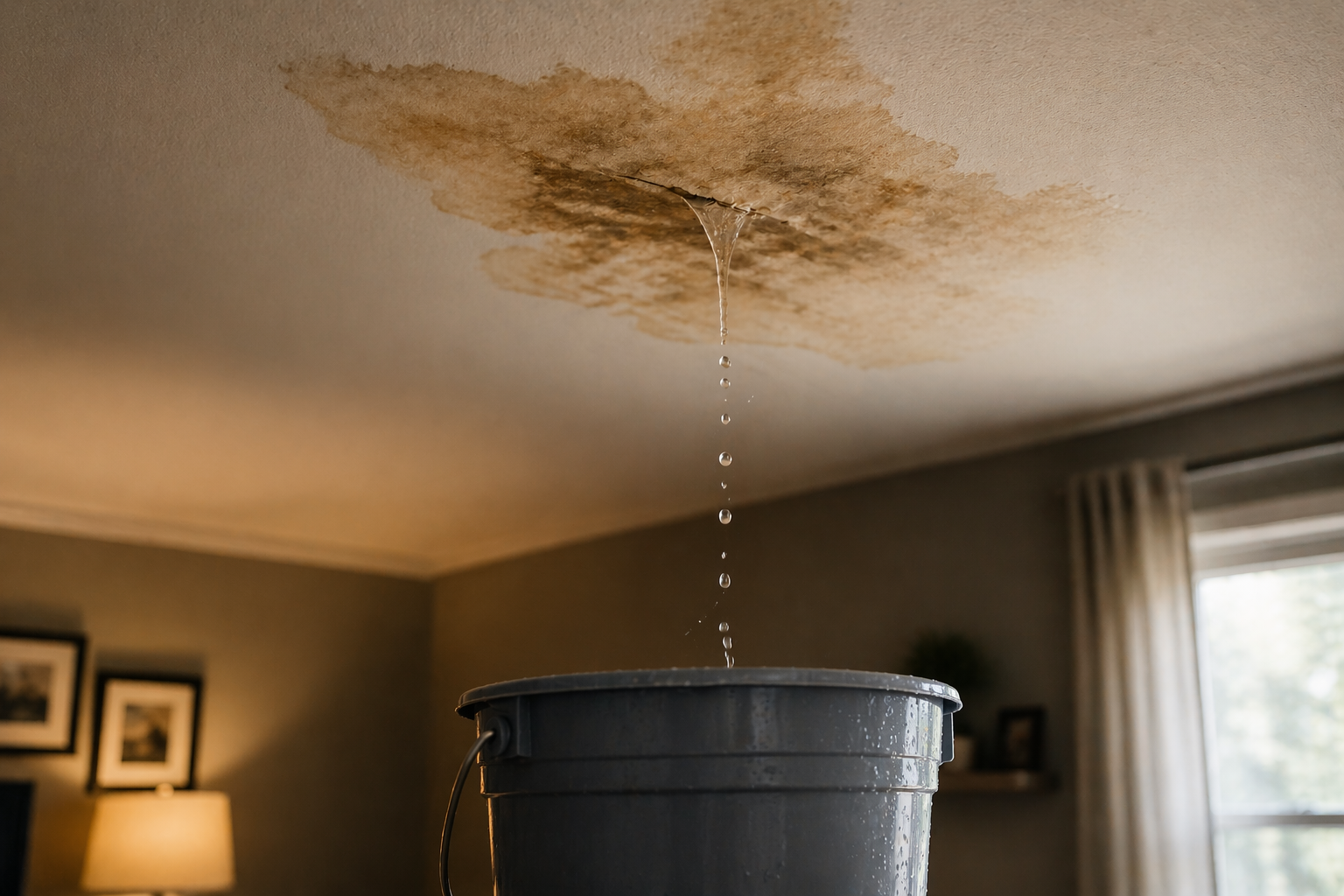
When water shows up inside a home, the focus almost always goes to the visible area. That’s the part that looks damaged, so it gets sealed, patched, or replaced. For a while, everything looks fine, which makes it feel like it worked.
But by the time water becomes visible, the system has already been changing for a while. Materials don’t fail in one isolated spot. Sealants dry out. Flashing shifts. Small separations begin to form in more than one place, even if only one of them is obvious.
Fixing one point doesn’t change what’s happening around it.
What this usually tells you
If something has been repaired and the issue comes back, it typically means one of two things:
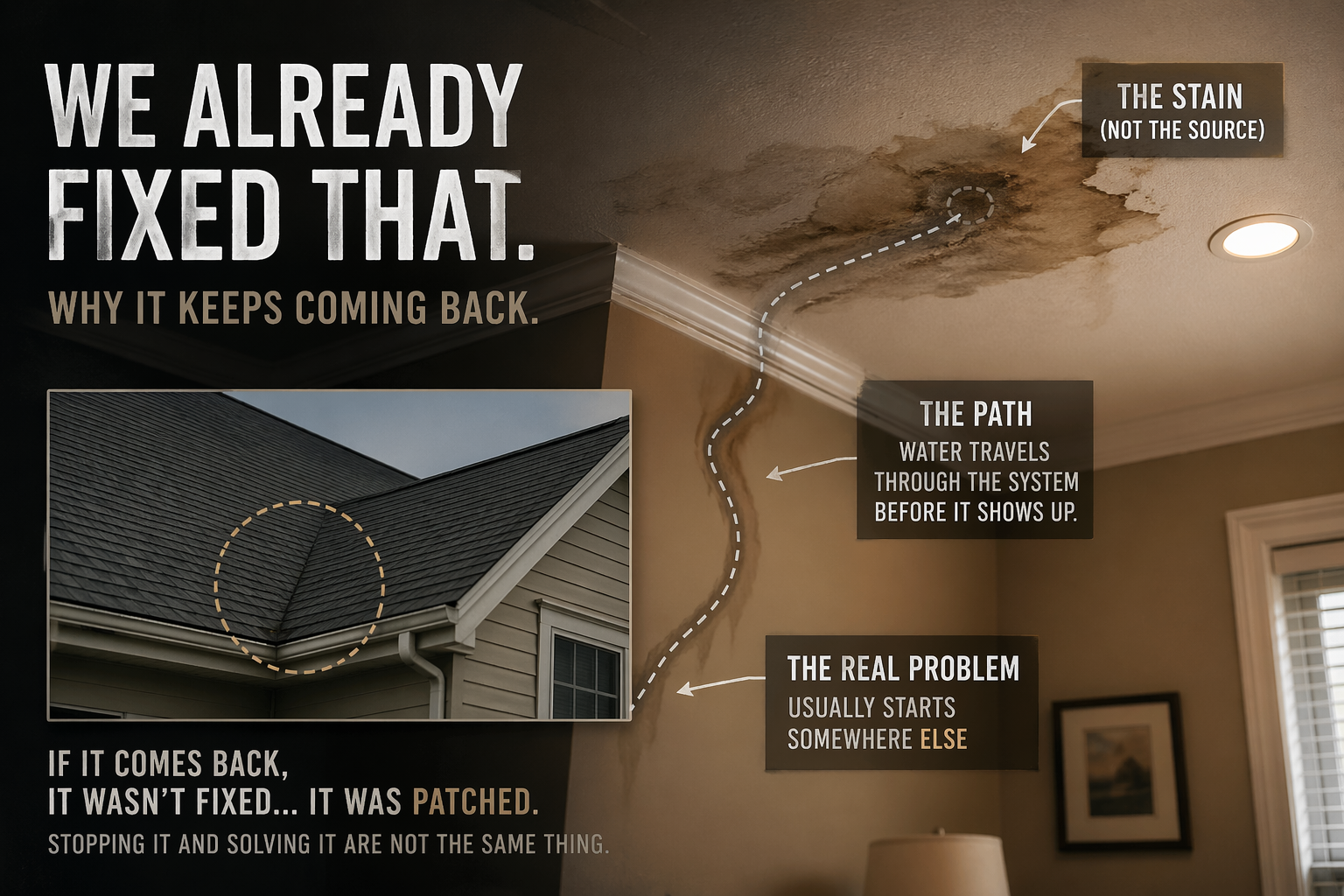
The repair was focused on where the problem showed up, not where it started
or
The surrounding area was already beginning to break down and wasn’t addressed
In both cases, the condition that allowed water in is still there.
How to think about it differently
Instead of asking “Was it fixed?” the better question is “Was the source actually identified?”
If the answer isn’t clear, that’s usually where the problem is.
A repair should answer:
• Where the water entered
• What allowed it to get in
• Whether that condition exists anywhere else nearby
If those questions weren’t part of the process, the repair was likely limited to the visible area.
What to look at next
If you’re dealing with a repeat issue, step back from the exact spot and look at the area around it.
Focus on:
• What is directly above the problem area
• Any roof penetrations or transitions nearby
• Whether that section of the roof has been repaired before
• Whether there are multiple small signs, not just one obvious one
If more than one of those things applies, the issue is probably not isolated.
What not to rely on
Be cautious of repairs that are described as quick fixes, sealing one point, or “taking care of that spot.”
Those approaches can work temporarily, but they don’t always hold if the surrounding materials are already starting to change.
When to take a different approach
If the same issue has come back more than once, it’s time to assume the original scope was too narrow.
At that point, it’s less about fixing the spot and more about understanding the section of the roof as a whole.
Final thought
If something has already been repaired and didn’t stay fixed, it’s not random.
It’s usually a sign that the problem was treated where it showed up, not where it actually began.
That’s the difference between stopping something and solving it.
Disclaimer
This article is provided for general educational purposes only and is intended to help homeowners better understand common conditions related to roof leaks and moisture intrusion. It is not a diagnosis, a scope of work, or a recommendation for any specific repair.
Every home is different. Conditions can vary based on age, materials, prior work, weather exposure, and construction methods. What appears to be a minor issue may involve underlying conditions that are not visible without a proper on site evaluation.
No action should be taken based solely on this information. Any inspection, repair, or replacement decisions should be made with a qualified professional who can assess the specific conditions of the property.
The author and publisher assume no responsibility or liability for any actions taken or not taken based on the content of this article, or for any outcomes resulting from reliance on this information.
