

What a Ceiling Stain Is Actually Telling You
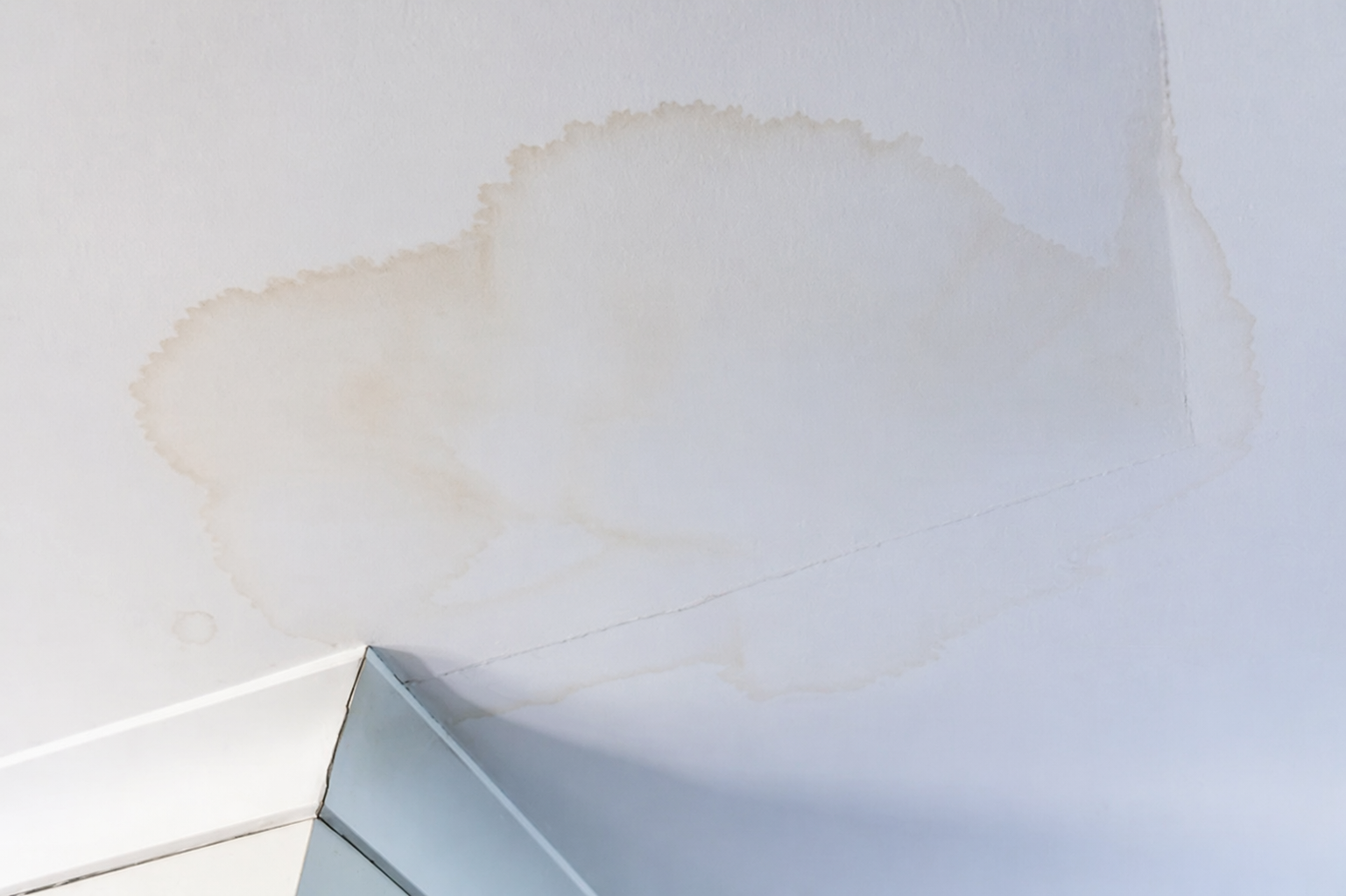
And why it often shows up after the rain stops
A ceiling stain usually gets noticed after the rain is over.
That’s what makes it confusing.
Most people expect to see water while it’s actively raining, but that’s not how it usually works. By the time a stain shows up, water has already made its way into the system and is moving through areas you can’t see.
What you’re looking at is not the beginning of the problem. It’s the point where it finally becomes visible.
What is actually happening
Water doesn’t come straight through the ceiling.
It enters somewhere above, then moves along framing, insulation, or other materials before it finds a place to show itself. That path can take time, which is why the stain often appears after everything outside has already dried.
In some cases, the moisture builds up slowly and only becomes visible once enough has collected to affect the surface.
Why the timing feels off
One of the most common questions is why the stain shows up when it’s no longer raining.
That usually comes down to delayed movement.
Water may enter during a storm, but it doesn’t always show up right away. It can sit, spread, and travel before it finally reaches a visible point. Changes in temperature and humidity can also make it more noticeable after the fact.
Where it usually starts
The source is almost always somewhere above the stain.
Common starting points include:
• Roof penetrations like vent pipes
• Flashing that has shifted or broken down
• Valleys where water concentrates
• Areas with previous repairs
• Transitions where the roof meets a wall
These are the areas that tend to open up first and allow moisture in.
Why the location can be misleading
The stain itself is not a reliable indicator of where the issue began.
Water can travel several feet before it shows up, depending on the structure of the home. That’s why focusing only on the spot you see often leads to the wrong conclusion.
What matters is understanding how the system above that area is functioning.
What to pay attention to
A ceiling stain is usually one of the first visible signs that something has changed.
Pay attention to:
• Whether the stain grows after each storm
• Any pattern or recurring location
• Changes in color or texture
• Signs of moisture in the attic above
These details help determine whether the issue is active and how it’s progressing.
Final thought
A ceiling stain is not just a cosmetic issue.
It’s a signal that water has already made its way into the system. The important part is not just addressing the visible area, but understanding where it started and why it was able to get in.
Disclaimer
This article is provided for general educational purposes only and is intended to help homeowners better understand common conditions related to roof leaks and moisture intrusion. It is not a diagnosis, a scope of work, or a recommendation for any specific repair.
Every home is different. Conditions can vary based on age, materials, prior work, weather exposure, and construction methods. What appears to be a minor issue may involve underlying conditions that are not visible without a proper on site evaluation.
No action should be taken based solely on this information. Any inspection, repair, or replacement decisions should be made with a qualified professional who can assess the specific conditions of the property.
The author and publisher assume no responsibility or liability for any actions taken or not taken based on the content of this article, or for any outcomes resulting from reliance on this information.
