

What a Slow Leak Looks Like Before It Becomes Obvious
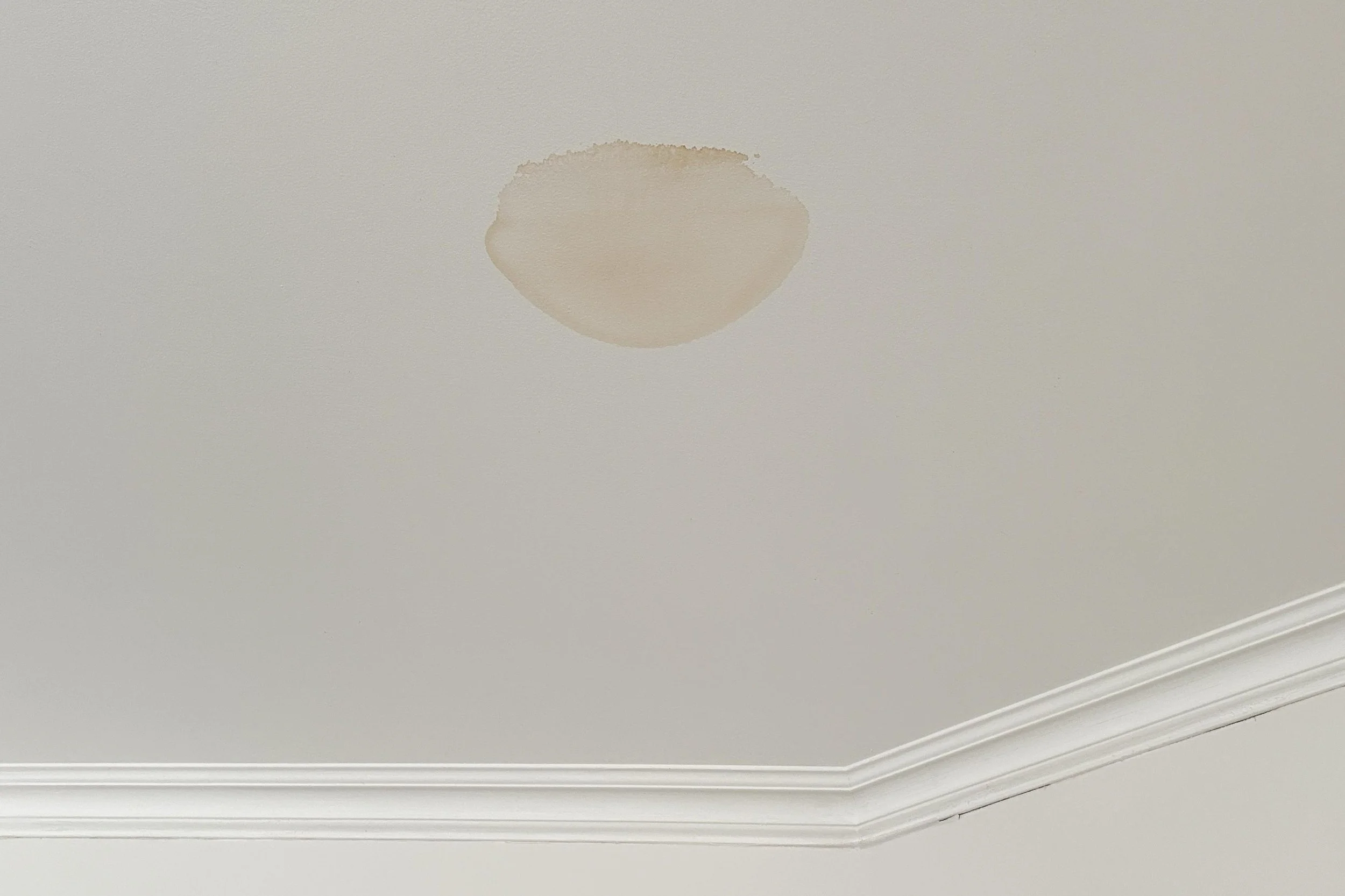
What to look for before it turns into something you cannot ignore
Not all leaks show up clearly.
Some start in a way that is easy to overlook.
There is no drip. No major stain. Nothing that forces you to act right away.
That is what makes them easy to miss.
What you are seeing
Small changes that do not feel urgent.
A faint mark. A slight change in texture. A surface that looks a little different than it used to.
It may stay the same for a while, then slowly change.
It does not feel like a leak.
What it usually means
A slow leak is exactly what it sounds like.
Water is getting in, but in very small amounts.
It is not enough to show up right away, but it is enough to affect materials over time.
That is why the damage develops gradually instead of all at once.
What to check
When changes are subtle, you need to look for consistency.
Start with:
• Whether the area looks different than the surrounding surfaces
• If the texture feels slightly off when touched
• Whether the color changes slightly over time
• If the area is near a roof section, exterior wall, or transition point
• Whether similar small changes are starting to appear nearby
You are not looking for a clear leak. You are looking for a pattern that is starting to form.
What matters and what does not
What matters is whether the condition is slowly changing.
If it is, that means water is present and affecting the material.
What does not matter is that it is small.
Small changes are how larger problems begin.
What to do next
If you see a small change that is not getting worse, you can monitor it.
If it slowly changes over time, treat it as active.
That is when you shift your focus to what is above or around that area.
That is where the source usually is.
Who to call
If the area lines up with the roof or changes after rain
Start with a roofing professional.
If it is along a wall or near a window
Look at the exterior system, not just the surface.
If the condition is unclear but continuing to change
A general contractor can help look at how that section of the home is functioning as a whole.
What to avoid
Do not wait for it to turn into a clear leak before paying attention.
That is when the damage has already progressed.
Do not repair the surface just to make it look better.
If the condition is still active, it will come back.
When to take it more seriously
If the area becomes more noticeable, spreads, or starts to affect nearby surfaces, it is no longer minor.
It is a leak that has been developing over time.
Final thought
A slow leak does not stay small.
It just takes longer to show you what is happening.
Disclaimer
This article is provided for general educational purposes only and is intended to help homeowners better understand common conditions related to roof leaks and moisture intrusion. It is not a diagnosis, a scope of work, or a recommendation for any specific repair.
Every home is different. Conditions can vary based on age, materials, prior work, weather exposure, and construction methods. What appears to be a minor issue may involve underlying conditions that are not visible without a proper on site evaluation.
No action should be taken based solely on this information. Any inspection, repair, or replacement decisions should be made with a qualified professional who can assess the specific conditions of the property.
The author and publisher assume no responsibility or liability for any actions taken or not taken based on the content of this article, or for any outcomes resulting from reliance on this information.
