

Why New Repairs Never Match the Rest of the House
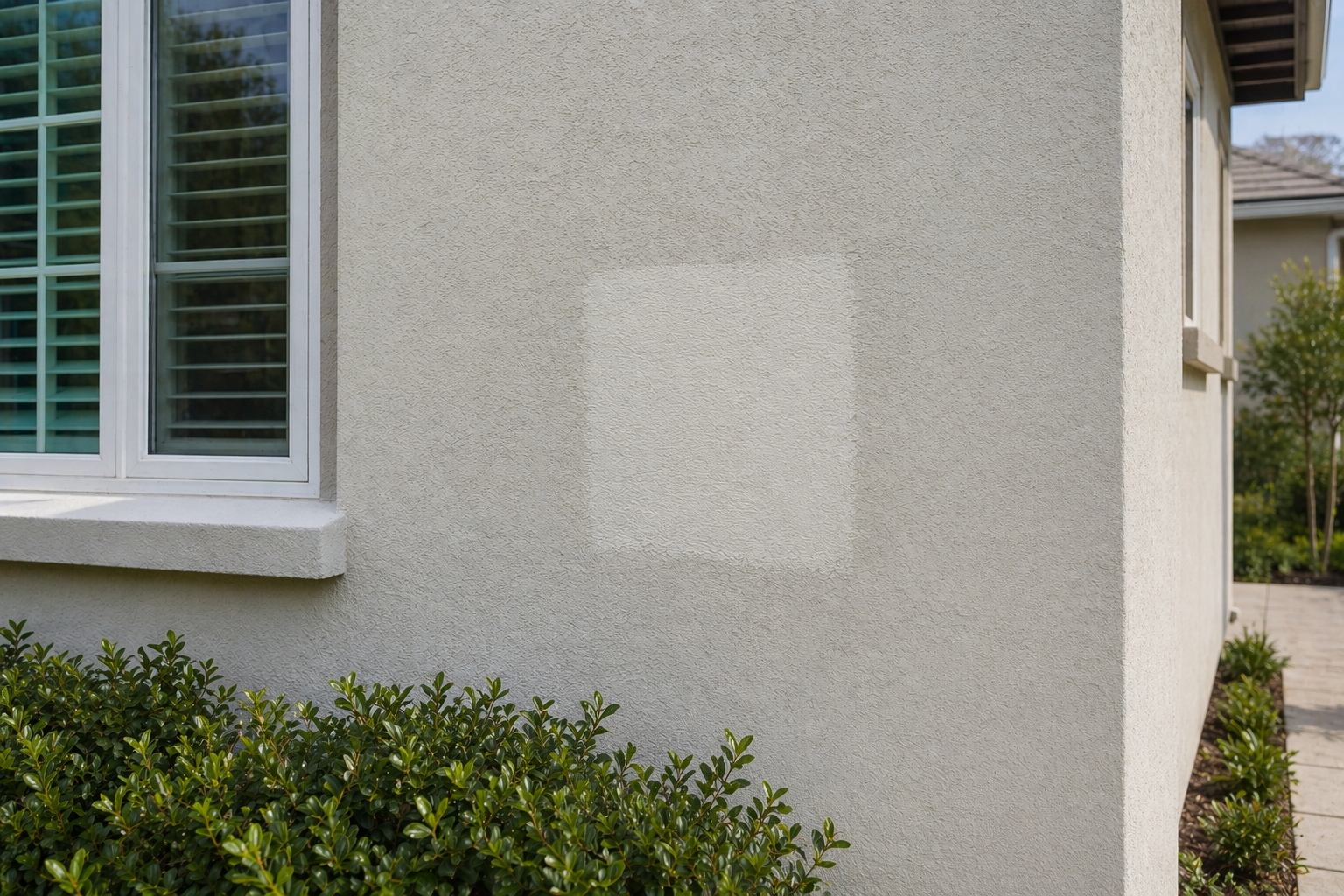
And why that doesn’t always mean something was done wrong
You fix one section.
Then you step back and look at it.
And it stands out immediately.
The color is slightly off.
The texture looks different.
That one area doesn’t blend in.
Now it feels like something went wrong.
What you’re seeing
A repaired area that doesn’t match the rest of the home.
Even when the work is done correctly.
Even when the color is close.
It still stands out.
What’s actually happening
The rest of the home has aged.
The repaired section hasn’t.
Paint fades.
Stucco weathers.
Surfaces change over time.
A new repair is starting from zero.
The rest of the house isn’t.
Why it stands out
Your eye picks up contrast.
Even a small difference shows up when it sits next to something older.
That’s why one patch looks so obvious.
What most people assume
Wrong color
Bad match
Poor workmanship
Sometimes that’s true.
Most of the time, it’s not.
What actually matters
Not whether it matches in that moment.
But how it’s blended into the rest of the surface.
Where people get it wrong
They try to paint just the patch.
That guarantees it will stand out.
Always.
There’s no way to blend a small, new section into a larger, aged surface by only painting that one spot.
What should be done instead
Paint needs to be carried past the repair.
Corner to corner.
Or seam to seam.
Something that breaks the visual line.
That’s what allows it to blend.
Anything smaller will always read as a patch.
What to do next
If a repair stands out, don’t assume it was done wrong.
Look at how far the paint was carried.
If it stops at the patch, that’s the issue.
Not the repair itself.
Who to call
If you’re dealing with a visible repair
You need someone who understands both the material and the finish
If it’s stucco or painted surfaces
A contractor experienced in repair and exterior painting can evaluate whether it needs to be blended properly
If multiple areas are being patched
It may make more sense to treat larger sections instead of spot repairs
What to avoid
• painting only the patch
• expecting a perfect match on aged surfaces
• redoing good work without understanding why it stands out
When to take it more seriously
If the repair stands out and is also failing, separating, or wearing differently
That’s not a blending issue
That’s something else
Final thought
A repair shouldn’t just fix the surface.
It needs to be blended into it.
Disclaimer
This article is provided for general educational purposes only and is intended to help homeowners better understand common conditions related to exterior finishes. It is not a diagnosis, a scope of work, or a recommendation for any specific repair.
Every home is different. Conditions can vary based on materials, installation, exposure, and structural factors. What appears to be a minor issue may involve underlying conditions that are not visible without a proper on site evaluation.
No action should be taken based solely on this information. Any inspection, repair, or replacement decisions should be made with a qualified professional who can assess the specific conditions of the property.
The author and publisher assume no responsibility or liability for any actions taken or not taken based on the content of this article, or for any outcomes resulting from reliance on this information.
