

What Rotted Fascia and Soffit Are Actually Telling You
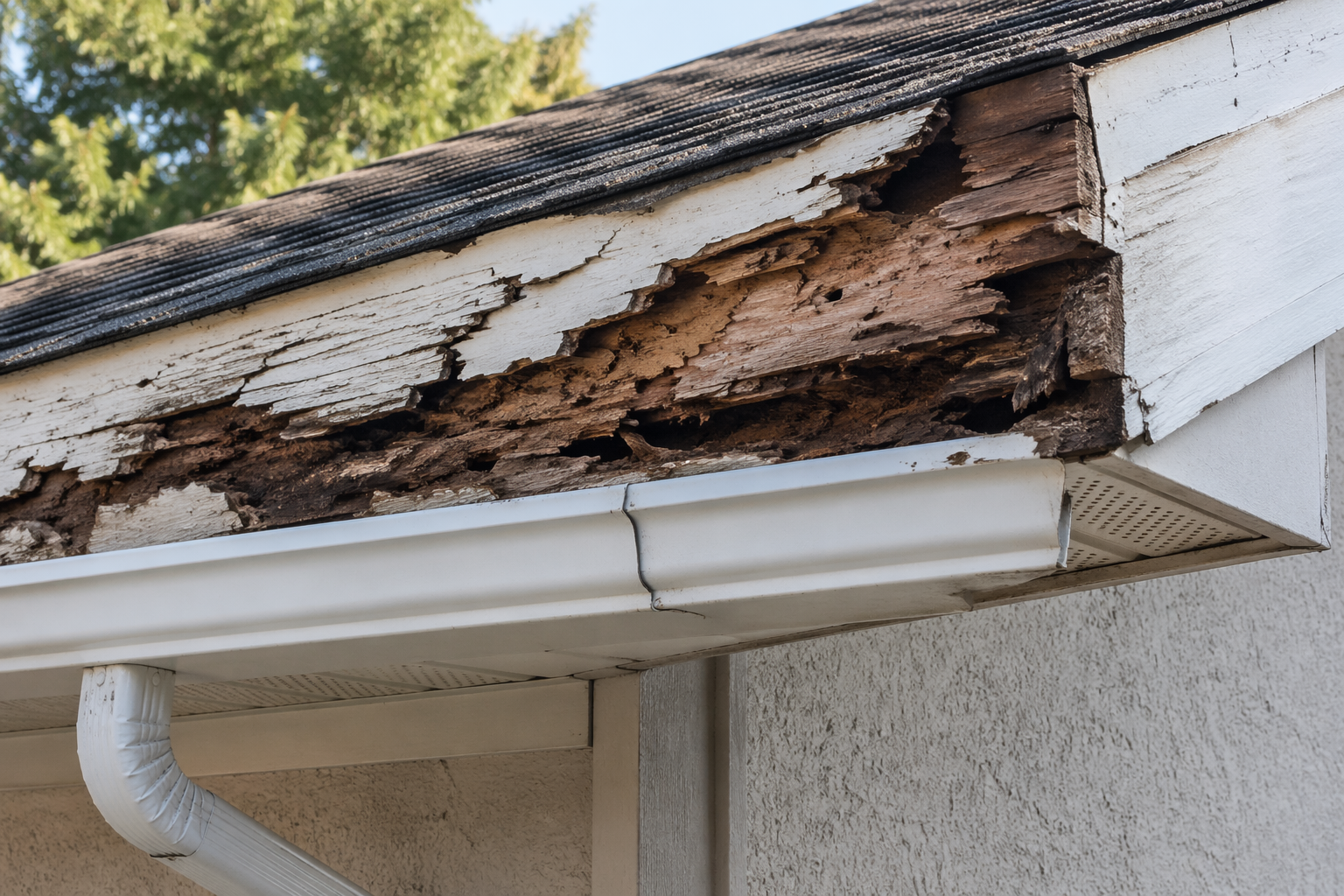
And why it’s not just a wood problem
You see peeling paint.
Soft spots.
Maybe a section looks swollen.
It’s easy to think it’s just the wood.
It’s not.
What you’re seeing
Breakdown at the roof edge.
Fascia.
Soffit.
Trim.
You’ll notice:
• peeling or bubbling paint
• soft or deteriorating wood
• dark or uneven sections
• areas starting to separate
That’s just what you can see.
What’s actually happening
Water is getting in.
And it’s not a one-time thing.
Fascia and soffit don’t rot from one event.
They rot from repeated exposure.
That usually comes from:
Roof runoff not being controlled
Water getting behind the roof edge
Failed sealing at joints
Gutters not doing their job
Poor airflow in the soffit
Over time, the material breaks down.
Why it shows up here
This area takes everything.
Water leaves the roof here.
Air moves through it.
Different materials meet here.
So when something is off, this is where it shows first.
Where gutters come in
Gutters decide where the water goes.
If they’re not working, water doesn’t disappear.
It goes somewhere else.
Over the edge
Behind the fascia
Back into the soffit
That’s where the damage starts.
Small issues are enough:
• clogged gutters
• wrong slope
• water shooting past the gutter
• loose sections
If water isn’t being controlled, it will find a way in.
When gutters are the fix
A lot of the time, this isn’t about the wood.
It’s about control.
If water keeps hitting the same area, adding or correcting gutters can change that.
That might mean:
Adding gutters where there aren’t any
Fixing slope so water actually moves
Making sure water is being caught, not missed
The goal is simple.
Keep water off the edge.
Where people get it wrong
They fix the wood.
Cut it out.
Replace it.
Paint it.
It looks good.
Then it comes back.
Same spot.
Because nothing else changed.
What actually matters
Where the water is coming from.
And how it’s being handled.
What to look at
Before repairing anything, check the conditions:
Is water running past the gutter
Are gutters actually catching water
Is water getting behind the fascia
Is the roof edge sealed properly
Is the soffit ventilating the way it should
That’s the real issue.
What to do next
Don’t start with replacing wood.
Start with controlling the water.
If that’s not fixed, the new material won’t last.
Who to call
Start with water movement.
If it ties to runoff or gutters
Have a roofer look at how water is being handled
If it’s localized to fascia, soffit, or trim
You need someone who understands exterior systems, not just repair
If it’s been fixed before and came back
Step back and look at the whole section
What to avoid
• treating it like a wood problem
• ignoring gutters
• replacing material without fixing water flow
• waiting until it gets worse
When to take it seriously
If the wood is soft, separating, or coming back after repair
That’s ongoing water.
Final thought
Rotted fascia and soffit aren’t the problem.
They’re where the problem shows up.
Disclaimer
This article is provided for general educational purposes only and is intended to help homeowners better understand common conditions related to exterior finishes. It is not a diagnosis, a scope of work, or a recommendation for any specific repair.
Every home is different. Conditions can vary based on materials, installation, exposure, and structural factors. What appears to be a minor issue may involve underlying conditions that are not visible without a proper on site evaluation.
No action should be taken based solely on this information. Any inspection, repair, or replacement decisions should be made with a qualified professional who can assess the specific conditions of the property.
The author and publisher assume no responsibility or liability for any actions taken or not taken based on the content of this article, or for any outcomes resulting from reliance on this information.
