

Why Water Drips Behind Your Gutter Instead of Into It
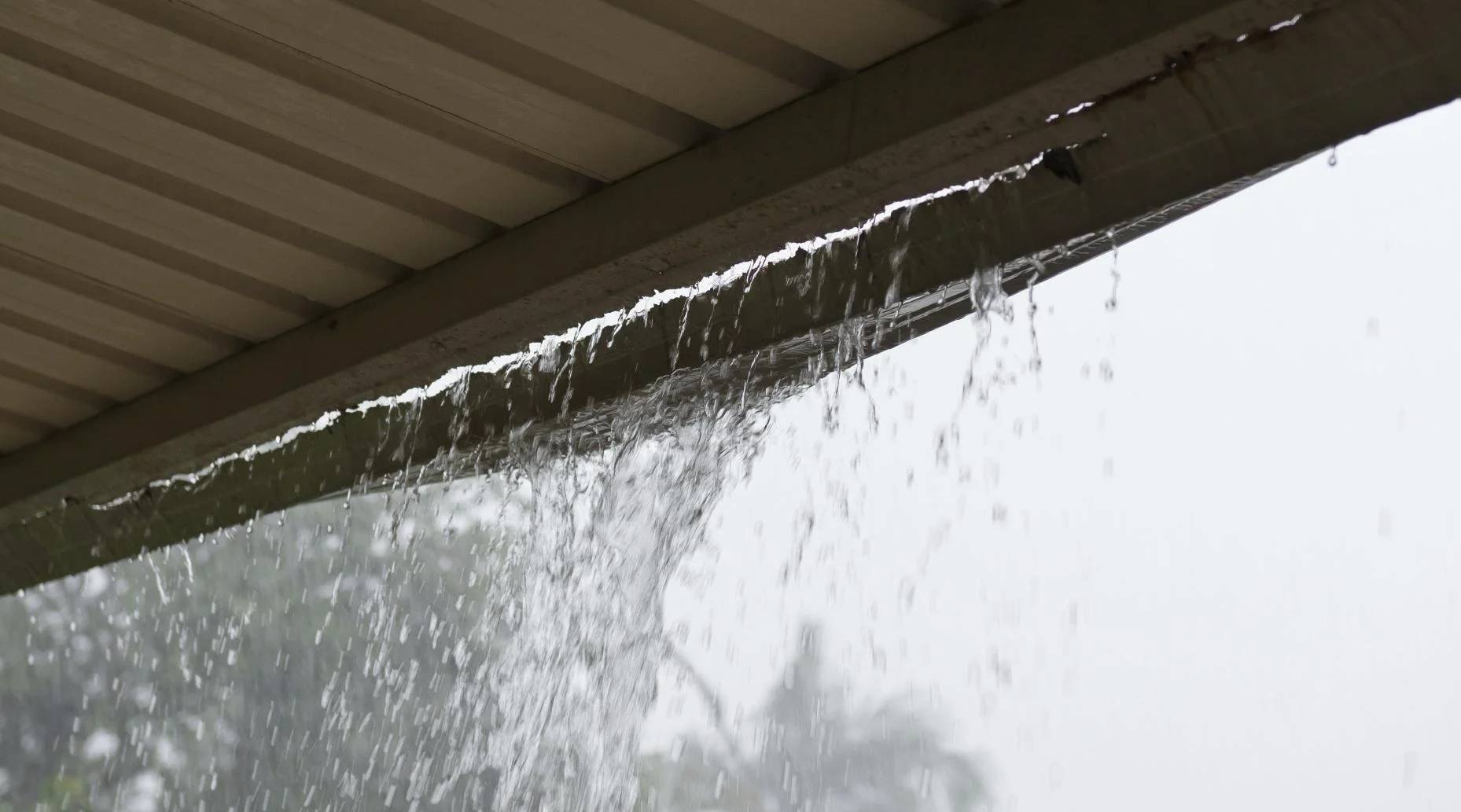
And why it leads to bigger problems
You watch it rain.
Water comes off the roof.
Some of it goes into the gutter.
Some of it doesn’t.
It runs behind it.
Down the fascia.
Into the soffit.
That’s not normal.
What you’re seeing
Water missing the gutter.
Or getting behind it.
Usually in the same spots.
What’s actually happening
The system isn’t catching water the way it should.
That comes down to:
Gutter placement
Gutter height
No drip edge
Clogging
Too much water in certain areas
Instead of being controlled, the water escapes.
Why it shows up in certain areas
Not all sections of the roof handle water the same.
Some carry more volume.
Some move water faster.
That’s where this shows first.
What most people get wrong
They think it just needs to be cleaned.
Sometimes it does.
Most of the time, that’s not the issue.
What actually matters
Whether the water is being caught cleanly.
Not whether a gutter is there.
What to look at
Watch it when it rains.
That tells you everything.
Is water going into the gutter
Or past it
Or behind it
That’s your answer.
What to do next
Don’t ignore it.
Water going behind the gutter is water going into the structure.
That leads to:
Fascia rot
Soffit damage
Paint failure
Fix how the water is being caught, and you fix all of that.
Who to call
If water isn’t being caught properly
You need someone who understands how the roof edge and gutter work together
Not just someone installing gutters
If it’s tied to the roof edge
Have a roofer look at it
If it’s placement or performance
It needs to be adjusted, not just cleaned
What to avoid
• assuming overflow is normal
• only cleaning without checking the setup
• ignoring water going behind the gutter
When to take it seriously
If it happens in the same areas every time it rains
That’s ongoing water hitting the structure
Final thought
A gutter only works if it actually catches the water.
Disclaimer
This article is provided for general educational purposes only and is intended to help homeowners better understand common conditions related to exterior finishes. It is not a diagnosis, a scope of work, or a recommendation for any specific repair.
Every home is different. Conditions can vary based on materials, installation, exposure, and structural factors. What appears to be a minor issue may involve underlying conditions that are not visible without a proper on site evaluation.
No action should be taken based solely on this information. Any inspection, repair, or replacement decisions should be made with a qualified professional who can assess the specific conditions of the property.
The author and publisher assume no responsibility or liability for any actions taken or not taken based on the content of this article, or for any outcomes resulting from reliance on this information.
