

Why Your Garage Door Weatherstripping Matters More Than You Think
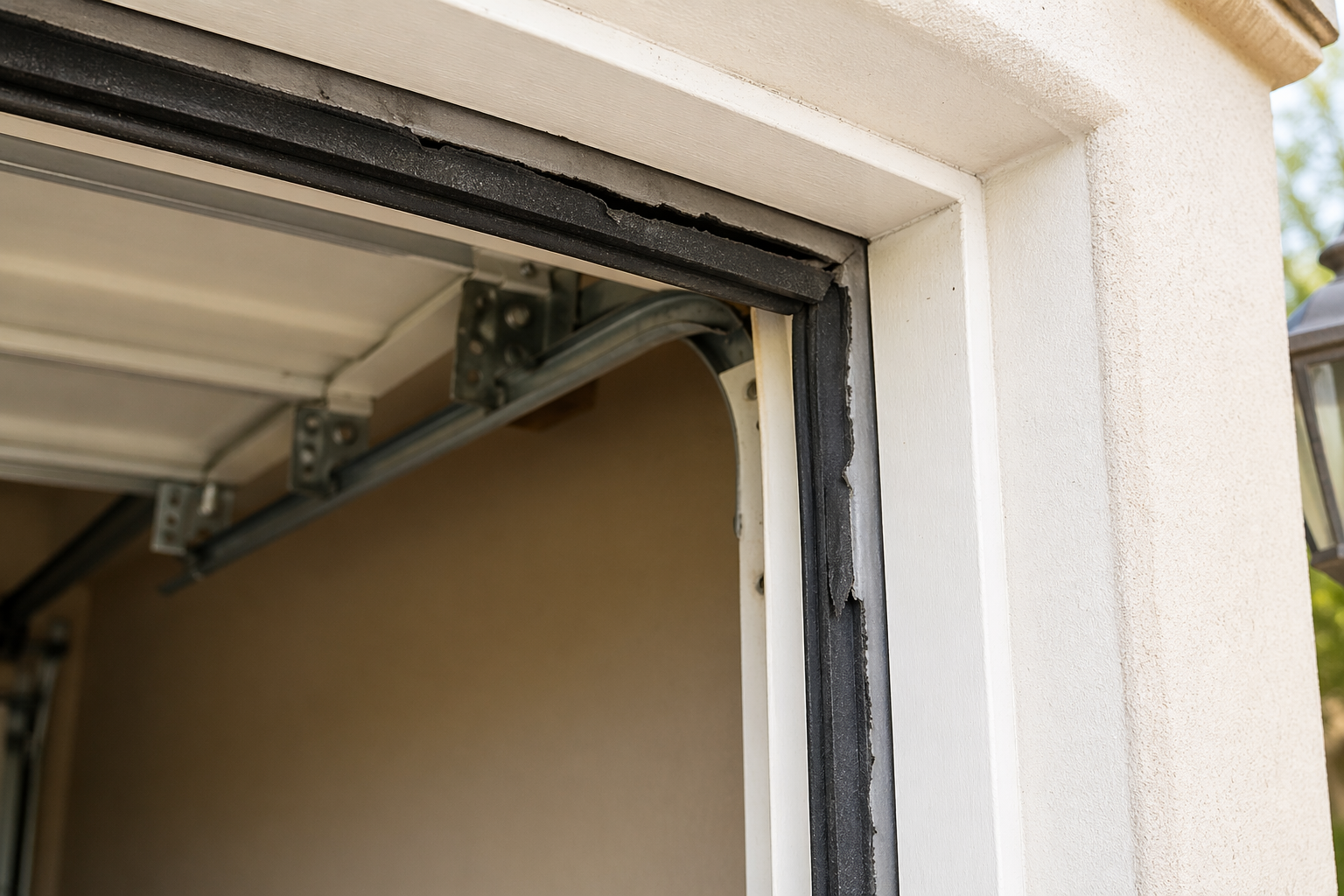
And what it’s actually doing
You don’t usually think about it until something feels off.
The strip along the bottom of the garage door. The sides. The top. It all looks minor, but it’s what separates the inside from the outside.
When it’s working, you don’t notice it. When it’s not, things start getting in.
What you’re seeing
Small gaps along the edges. Light coming through at the bottom. Rubber that looks worn, cracked, or flattened. Sometimes you feel air moving. Sometimes you don’t, but it’s still happening.
What’s actually happening
That seal is what keeps water, air, dust, and pests out of the garage. Once it stops making proper contact, it’s no longer doing that job.
The door can still open and close perfectly, but that doesn’t mean it’s sealed.
Why it fails
Weatherstripping sits at one of the most exposed points on the home. It takes constant sun, heat, cold, and pressure every time the door closes.
Over time, it dries out, loses shape, and stops sealing evenly across the surface.
Why people miss it
The door still works, so it feels fine. There’s no obvious failure at first. Just small gaps that are easy to ignore.
But once the seal breaks down, the outside starts working its way in.
What to look at
Close the garage door and look from the inside.
If you see light coming through, if the gaps are uneven, or if the material looks brittle or compressed, that’s all you need to know. The seal isn’t doing its job.
What actually matters
The seal has to make consistent contact across the entire edge. If it’s not touching in certain areas, it’s not sealing.
What to do next
This is a simple fix, but it makes a difference.
Replacing weatherstripping restores that barrier. It keeps water out, limits airflow, and protects everything inside the garage.
If the door itself isn’t sitting evenly, that may need to be adjusted as well. A new seal won’t fix a misaligned door.
Who to call
If the weatherstripping is worn, cracked, or flattened
Call a garage door company or an exterior painter. Both should be able to handle a straight replacement.
If you’re seeing uneven gaps or light in certain areas
Call a garage door technician. The door likely needs adjustment before any new seal will work.
If water is coming in under the door
Have someone look at the concrete at the opening. A low spot or slope issue will let water in even with a good seal.
What to avoid
Don’t ignore small gaps. Don’t assume that because the door closes, it’s sealed. And don’t wait until water or pests show up to deal with it.
When to take it more seriously
If you’re seeing water, debris, or consistent airflow coming in, the seal has already failed.
Final thought
The door closing doesn’t mean anything.
The seal is what matters.
Disclaimer
This article is provided for general educational purposes only and is intended to help homeowners better understand common conditions related to exterior finishes. It is not a diagnosis, a scope of work, or a recommendation for any specific repair.
Every home is different. Conditions can vary based on materials, installation, exposure, and structural factors. What appears to be a minor issue may involve underlying conditions that are not visible without a proper on site evaluation.
No action should be taken based solely on this information. Any inspection, repair, or replacement decisions should be made with a qualified professional who can assess the specific conditions of the property.
The author and publisher assume no responsibility or liability for any actions taken or not taken based on the content of this article, or for any outcomes resulting from reliance on this information.
